my favorite first-person documentaries
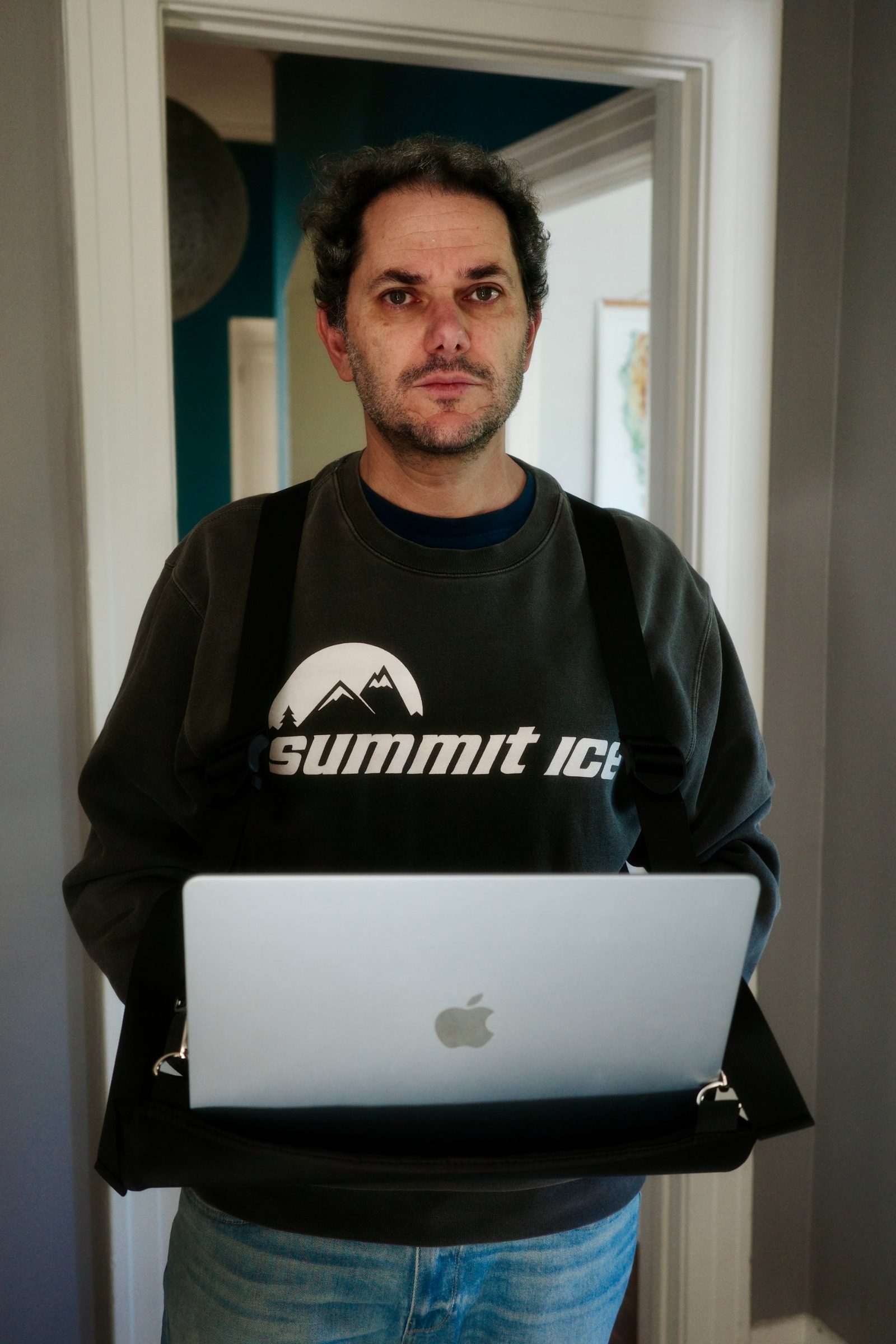
Like everyone else I know, I've spent the past couple weeks talking about You Can See Everything and consuming many of the podcasts, essays, and youtube videos inspired by its success. I've been a Nathan Fielder fan for ages, as you can tell from my Halloween Costume last year.
Nathan Fielder and Lance Oppenheim have said in interviews that their original plan was not to include Nathan in the movie, which is pretty hard to imagine given what the final film turned out to be. The layers of first person narrative were, in my opinion, one of the keys to making this unlikely film work.
So I got to thinking of some of my other favorite documentaries where the director included themselves in the narrative. In no particular order, here they are:
Time Indefinite (1993)
Coincidentally (or maybe not, given the fact that the director was Lance Oppenheim's senior thesis film adviser) the last line of this trailer is almost the same as the last line of "You Can See Everything."
I first watched Ross McElwee's films in college and they were instrumental in making me want to make documentaries. Shout out to my Anthropology and Film professorÁkos Östör for showing us some incredible documentaries during that class, including his own beautifully shot ethnographic films about India.
The Beaches of Agnés (2008)
Almost any Agnés Varda film could be on this list. You truly can't go wrong. She was the GOAT. I also love her California collection of shorts that I have on DVD.
My Architect (2003)
I haven't seen this since it came out, but remember loving it at the time. I don't know if it was an acknowledged golden age of documentaries, but in the early 2000's (which were also the early days of mini-DV cameras) there were so many great docs that I went to see in the theater, mostly at Film Forum in NYC. I remember this one, Spellbound, Mad Hot Ballroom, The Cruise, and a bunch of others. What can I say, I love going to the movie theater, always have.
Kings Park: Stories from an American Mental Institution (2011)
This project really put me on a path to want to make documentaries. The director Lucy Winer (who just so happens to be my cousin) was institutionalized in Kings Park when she was 17. This film tells Lucy's story, the story of the institution, the stories of her fellow patients, and the much broader story of how society deals (or refuses to deal) with mental illness. It's an amazing film and I am so grateful to have worked on it in the early stages, both in filming and in post-production. Lucy taught me so much about how to create a documentary, and how to keep going even if it takes a decade to complete and the forces seem stacked against you. The editor Spiro Lampros taught me how to edit non-fiction. And the director of photography Claudia Raschke taught me how to make flat digital video feel more vibrant and cinematic.
Roger & Me (1989)
I saw this movie in high school, maybe even athigh school for a class (I went to a Quaker school). I just realized from the trailer that this movie was released by Warner Brothers, a fact that is hard to believe from the vantage point of 2026 and bums me out so I'll try not to think too much about it. When I think about this movie I think about how important the use of humor is when speaking truth to power. I think about the rabbits advertised with the handmade"Pets or Meat" sign. And I think about how Michael Moore had his own TV show called TV Nation, which had this segment featuring the great Yaphet Kotto trying, and failing, to hail a cab while a white convicted murderer gets a cab each time. Say what you will about the Waymo robots but at least they're not overtly racist.
Minding the Gap (2018)
This one is streaming, but I feel like it has the soul of some of the theatrical docs that I loved. It's deeply personal, beautifully shot, and a wonderful portrait of this subculture of the skateboarding buddies who helped save the director Bing Liu when he was younger.
Gimme Shelter (1970)
The Maysels Brothers are amongst my favorite documentary filmmakers, obvi. This one felt very influential on You Can See Everything in that it introduced the idea of the filmmaker playing footage from the documentary for their subject and seeing them react to it. On paper, there are lots of ways for this to go very wrong. But if your subject is Mick Jagger, or Elizabeth Holmes, it could also go very right.
The History of Concrete (2026)
I saw this movie twice in theaters. I love John Wilson and this felt like a deeper (but still hilarious) version of the format he perfected with his How To with John Wilson series. The true fans know that before it was on HBO, he did short versions of How To on his Vimeo channel. As much as I liked "You Can See Everything", this one wins my heart. Not to pit deadpan, awkward, socially anxious HBO Max content creators against each other. I'm glad they're friends so i don't have to choose a side.